



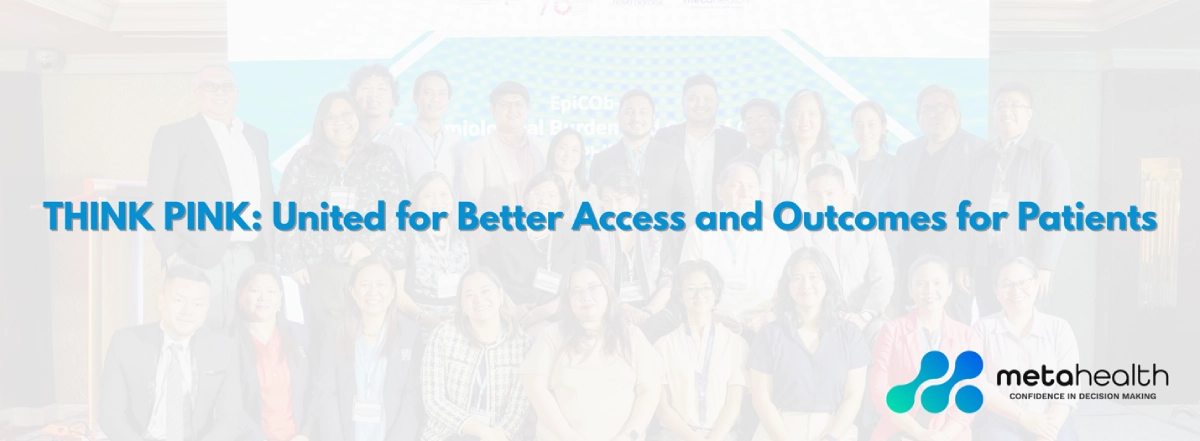
February 27–28, 2025 — Quezon City
At the Philippine National Cancer Summit (PNCS) 2025, the forum “THINK PINK: United for Better Access and Outcomes for Patients” brought together patient advocates, medical experts, government representatives, and researchers to address one pressing question: How can the Philippines ensure timely, affordable access to life-saving cancer medicines?
Organized by the Philippine College of Surgeons Cancer Commission Foundation (PCS CANCOM) and supported by Novartis Healthcare Philippines, the forum spotlighted the role of the Health Technology Assessment (HTA) process—a key step in determining which medicines are included in the Philippine National Formulary (PNF) and thus made available through government programs.
Key Calls to Action
Short-Term Solutions
- Increase patient group participation in DOH and PhilHealth technical working groups (TWGs).
- Continue developing clinical practice guidelines (CPGs) to speed up HTA reviews.
- Expand PhilHealth benefit packages to cover more essential medicines in the PNF.
- Maximize alternative assistance programs like the DOH’s MAIFIP and social service funding.
- Reinstitute exemption pathways to allow interim access to treatments not yet in the PNF.
Long-Term Solutions
- Improve the HTA process through ASEAN harmonization and better data availability.
- Explore commercial agreements with manufacturers for faster, more affordable procurement.
- Strengthen collaboration among medical societies, patient organizations, and policymakers to ensure evidence-based, patient-centered policy decisions.
Patient-Centered Policy in Action
Speakers emphasized that access to cancer treatment is not just about clinical efficacy—it’s about timeliness, affordability, and suitability for Filipino patients. Real-world examples from the Jose R. Reyes Memorial Medical Center (JRRMMC) showed how targeted programs like the Cancer and Supportive-Palliative Medicines Access Program (CSPMAP) and the Cancer Assistance Fund (CAF) can significantly improve availability despite resource constraints.
Forum discussions also tackled the moratorium on HTA nominations, the need for more CPG funding, and strategies to leverage existing ASEAN HTA findings to accelerate access in the Philippines.
As Dr. Soledad Balete of JRRMMC put it:
“We have to step up to the generation right now. Kung ano yung maganda, ano yung updated, (at) ano yung makakabuti sa taumbayan…”
The THINK PINK forum underscored that meaningful progress in cancer care requires more than science—it needs collaboration, advocacy, and an unwavering commitment to put patients first.