



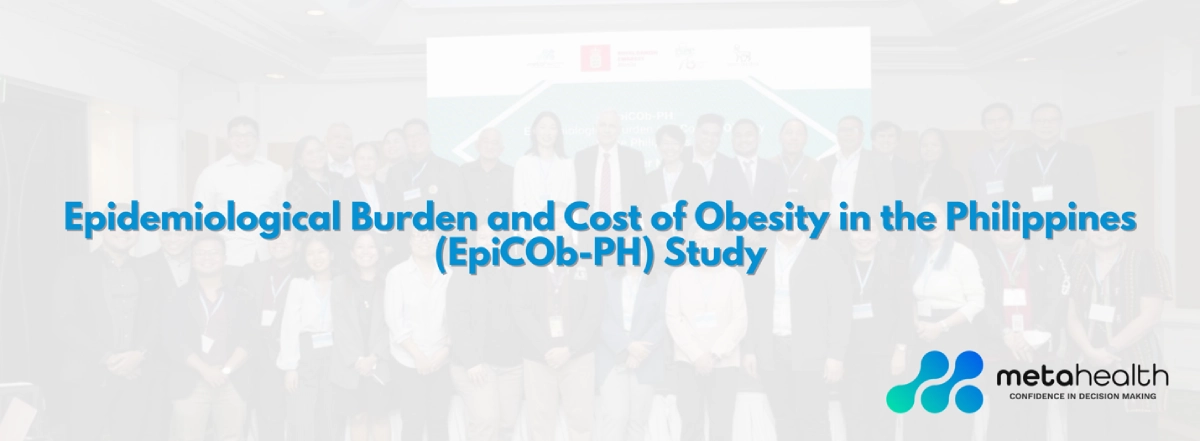
June 20, 2025 — Mandaluyong City
The second stakeholder consultation meeting for the Epidemiological Burden and Cost of Obesity in the Philippines (EpiCOb-PH) study gathered over 20 leaders from government, professional societies, patient organizations, academia, and industry at the Edsa Shangri-La Hotel. The event aimed to share study progress, gather expert insights, and strengthen multisectoral collaboration to address the country’s growing obesity challenge.
Dr. Jaime Galvez Tan, lead convenor of The Healthy Philippines Alliance, lauded the EpiCOb-PH team’s pioneering effort—the first of its kind in the country—and urged the use of locally available, nutritious food to combat obesity. Ambassador Franz-Michael Skjold Mellbin of the Kingdom of Denmark emphasized the power of data-driven policies and warned of the risks obesity poses to healthcare capacity and societal well-being.
Led by Dr. Madeleine de Rosas-Valera, the EpiCOb-PH team presented its mission: to generate local, evidence-based data on obesity’s health and economic toll. By analyzing national surveys, PhilHealth claims, and economic data, the study seeks to answer critical questions—how many Filipinos live with obesity, where they are, and its costs to families, employers, and the healthcare system.
Technical presentations from metaHealth Insights and Innovations, Inc. detailed the study’s methodology and early estimates, including the projected 8.6 to 19.1 million DALYs lost due to overweight and obesity annually. Stakeholders from organizations such as PHAP, PAPO, PCEDM, PASOO, PSN, and UNICEF shared recommendations, from improving public understanding to integrating obesity into the broader NCD prevention agenda.
Key points raised included:
- Addressing obesity stigma while promoting healthy lifestyles.
- Aligning interventions with the UN Sustainable Development Goals.
- Considering the food sector’s role in prevention.
- Leveraging government nutrition data for analysis.
Novo Nordisk’s General Manager, Ms. Wei Sun, closed the meeting by underscoring the high cost of inaction and calling for continued collaboration.
The EpiCOb-PH study will run until December 2025, with outputs including a technical report, public infographics, policy briefs, and a scientific manuscript. These will inform public and private decision-makers, influence insurance coverage, and support integrating obesity into the national health agenda.
Together, the stakeholders affirmed: obesity is not just a health issue—it is an economic, social, and national development concern requiring urgent, united action.